
The Weight Before the Snap
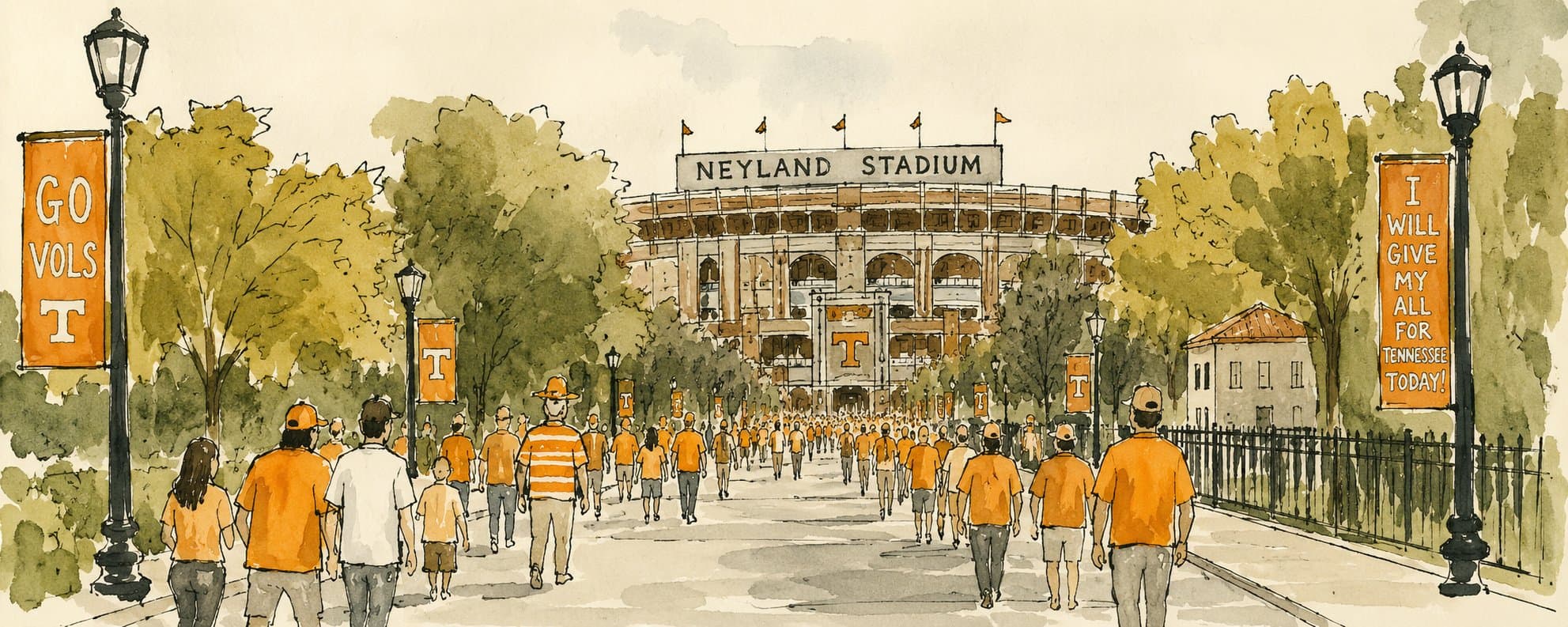
Condredge Holloway took snaps in Neyland Stadium when the Confederate battle flag still flew in the student section. Let that sit.
We talk about his scrambles. His arm. The way he made the option look like improvised jazz. We talk about him being the prototype — the athletic quarterback decades before the term became a compliment. What we don't talk about enough is what it cost him to be first.
Holloway arrived in Knoxville in 1972 from Huntsville, Alabama — which is its own irony, a Black kid from Alabama choosing Tennessee. The Montreal Expos had already drafted him out of high school. He chose football. He chose the SEC. He chose a league that had only just cracked open its doors to Black players and hadn't yet figured out how wide those doors were supposed to swing.
What 'First' Actually Means
Being first doesn't mean celebrated. It means tolerated, tested, and watched for any reason to be sent back.
Holloway played in an era when the quarterback position was still coded — in the minds of coaches, scouts, and a sizable portion of the fanbase — as a white man's job. Leadership. Intelligence. Decision-making. The position carried a language designed to exclude, and Holloway had to dismantle that language one scramble at a time.
He couldn't just be good. He had to be undeniable.
And he was. Three seasons starting. A Tennessee record for total offense that stood for years. He made Johnny Majors's offense sing. But Holloway has said publicly that he received death threats. That he couldn't go certain places in Knoxville. That being the face of Tennessee football meant being a target in ways that had nothing to do with defensive coordinators.
The Legacy We Built On Top of Him
Tennessee spent the next fifty years celebrating quarterback excellence — Heath Shuler, Peyton Manning, Erik Ainge, now Nico Iamaleava. That lineage has a foundation, and the foundation's name is Condredge Holloway.
But foundations are underground. You don't see them. You just benefit from them.
Holloway got a statue. Eventually. He got recognition. Eventually. The SEC moved slow on all of it — slow to integrate, slow to honor, slow to reckon.
The Question Nobody Asks
Here's what I keep coming back to: How many Condredge Holloways were there before him — players who had the talent but never got the chance because a head coach decided the fan base wasn't ready?
We celebrate the pioneer. We never count the ones who didn't make it to the door.
That's the uncomfortable truth this program — and this conference — still owes an honest answer to.